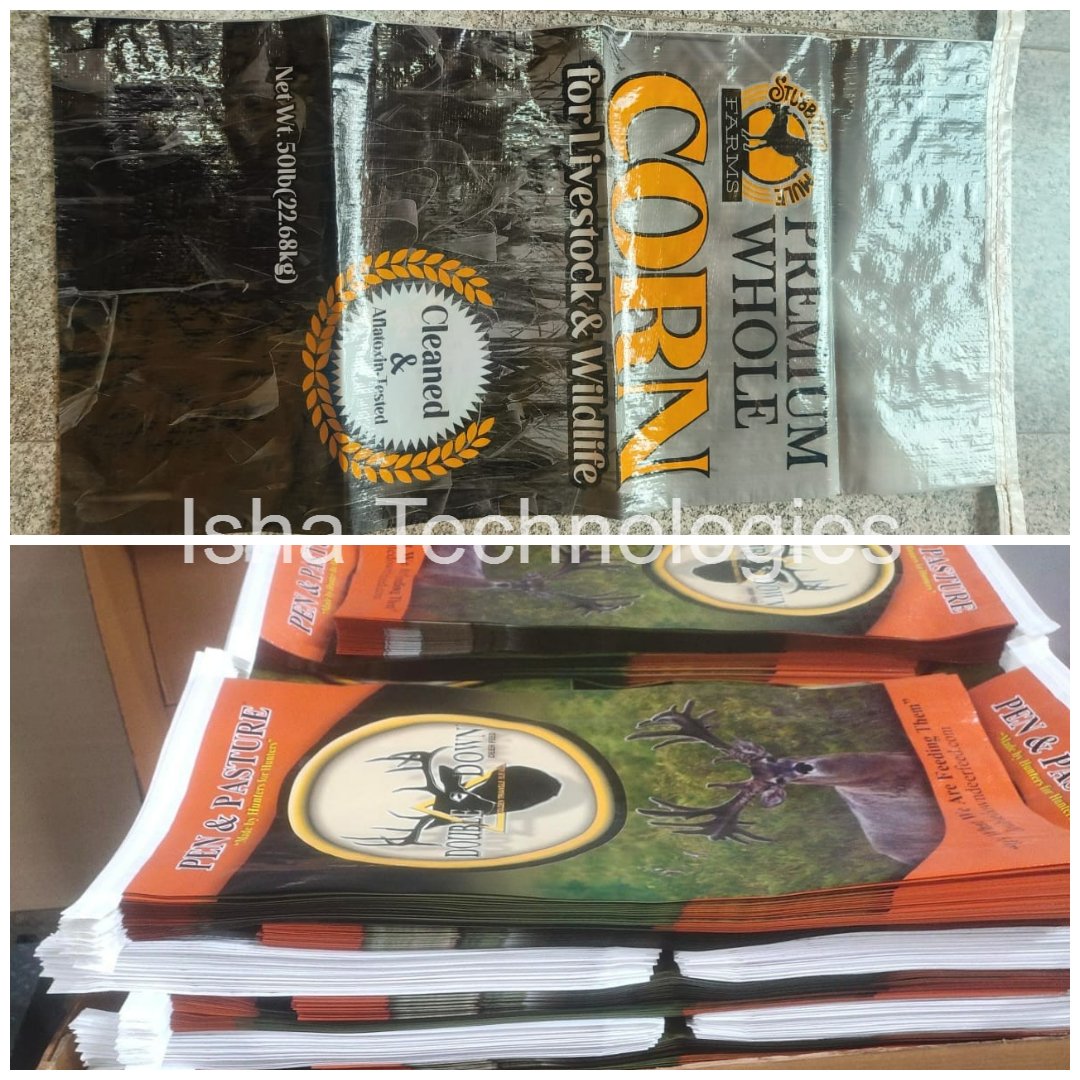
For rice millers, fertilizer manufacturers and food processors, packaging must carry the intended load, withstand distribution, present product information clearly and provide suitable protection.
BOPP bags for packaging combine a woven polypropylene structure with a laminated film surface. This construction brings handling strength and printed branding together in one sack. Rice, fertilizer and flour have different storage and containment needs, so each application requires a suitable specification.
Understanding BOPP Woven Bags
BOPP means biaxially oriented polypropylene—a polypropylene film stretched in two directions during manufacture. For laminated woven sacks, this film is bonded to woven polypropylene fabric. The fabric provides structural support, while the film creates a smooth printing surface and contributes to moisture resistance. Some designs also include an inner liner.
The term BOPP woven bags refers to this fabric-and-film construction. BOPP is also used in wrappers and pouches, but those formats have different structures and applications.
View Isha Technologies’ BOPP packaging bags to discuss the format suited to your product.
Main Features of Laminated BOPP Bags
Detailed Printing and Clear Branding
The film surface supports brand colours, product images and readable information. Reverse printing places the image behind the outer film, helping protect it from rubbing during handling. Check text size, colour consistency, barcode readability and graphic position on the finished bag.
Woven Construction for Load Support
The woven polypropylene layer provides structural support. Performance depends on fabric specification and bag assembly. Fabric weight, weave, seam design and bottom construction should be selected together. GSM measures fabric weight but does not independently establish finished-bag load performance.
Laminated Outer Surface
Laminated BOPP bags can help resist moisture exposure and protect printed graphics. Protection depends on seams, closures, perforations and liners, so specify the required performance rather than relying on a general “waterproof” description.
Suitable Dimensions
Width, length and gusset depth influence usable volume, filling performance and packed-bag shape. Closures and bottom designs must match the filling equipment and handling method.
BOPP Rice Bags
BOPP rice bags provide space for variety names, grade details, cooking instructions and batch information while supporting product protection during distribution.
Consider fill weight, rice bulk density, filling-machine dimensions and storage conditions. Check closure strength, grain containment and food-contact suitability. Where additional moisture protection is required, consider a suitable inner liner. A filling trial should confirm volume, closure operation and pallet arrangement.
BOPP Fertilizer Bags
Fertilizers differ in moisture sensitivity, particle size and chemical properties. BOPP fertilizer bags provide a woven structure with a printed surface for product names, composition and handling information.
Consider moisture absorption, fine-particle containment, chemical compatibility, transport exposure, closure requirements and product classification. Review the safety data sheet. Products classified as dangerous goods may require an approved packaging system beyond an ordinary laminated sack.
BOPP Food Packaging Bags
BOPP food packaging bags can be considered for dry products such as pulses, grains, sugar and flour when the construction meets food-contact requirements.
Selection should reflect moisture, particle, aroma and oxygen-protection needs. Verify food-contact components, contact conditions, material declarations, test reports, manufacturing hygiene and traceability.
For the Indian market, review relevant FSSAI food-contact packaging requirements, including applicable migration testing. A printed film or liner alone does not establish food-contact suitability.
What to Check Before Ordering
Request details of the woven fabric, film thickness, bonding structure and liner. Where moisture protection matters, ask for relevant water-vapour transmission data. For oxygen-sensitive foods, review oxygen-transmission evidence.
Finished-bag checks may include seam strength, filled-bag drop trials, closure inspection and lamination bond assessment. Consider stacking and surface friction where relevant.
Approve artwork and physical samples before production. Check dimensions, filled appearance, print position and packing-line compatibility.
Storage, Recycling and Supplier Selection
Store bags away from moisture, sunlight and sharp surfaces. Recycling depends on the complete construction, contamination and available facilities. Confirm acceptance with the intended recycler and do not describe BOPP bags as biodegradable without supporting evidence.
When requesting a quotation, provide the product name, fill weight, dimensions, artwork, filling method, closure requirements, storage conditions and order quantity.
Explore Isha Technologies’ BOPP bag solutions for specifications suited to rice, fertilizer or dry food products.